
My mother turned 58 the year she started paying attention to what she ate. Not obsessively she wasn’t counting calories or following a trendy protocol. She simply started noticing the connection between what was on her plate and how she felt the next morning. More energy. Fewer aches. Sharper focus. Better sleep. The changes weren’t dramatic at first. But over six months, they were undeniable.
That’s the quiet truth about healthy eating after 55 that most nutrition content fails to capture: it’s not about restriction or perfection. It’s about understanding how your body’s needs have genuinely shifted and responding to those changes with food choices that work with your biology rather than against it.
After 55, your metabolism slows, your muscle mass begins to decline, your gut microbiome loses diversity, your cardiovascular system faces greater risk, and your brain’s nutritional requirements become more specific. These are not reasons for alarm. They are reasons to eat with more intention.
This guide covers the five areas where targeted nutrition makes the most measurable difference for American adults over 55: managing chronic inflammation, preserving muscle strength, protecting cognitive function, supporting heart health, and restoring gut balance. Each section is grounded in current research and built around practical, real-world food choices not laboratory ideals.
If you’ve been told to “eat healthy” without being told exactly what that means at this stage of life, this is where the specifics begin.
Fighting chronic inflammation through food
Somewhere around their mid-50s, many Americans start noticing a pattern. Morning stiffness that takes longer to shake. Joints that ache after activities that never bothered them before. A general sense of fatigue that sleep doesn’t fully resolve. These symptoms often get dismissed as inevitable aging. Frequently, they’re something more specific: chronic low-grade inflammation.
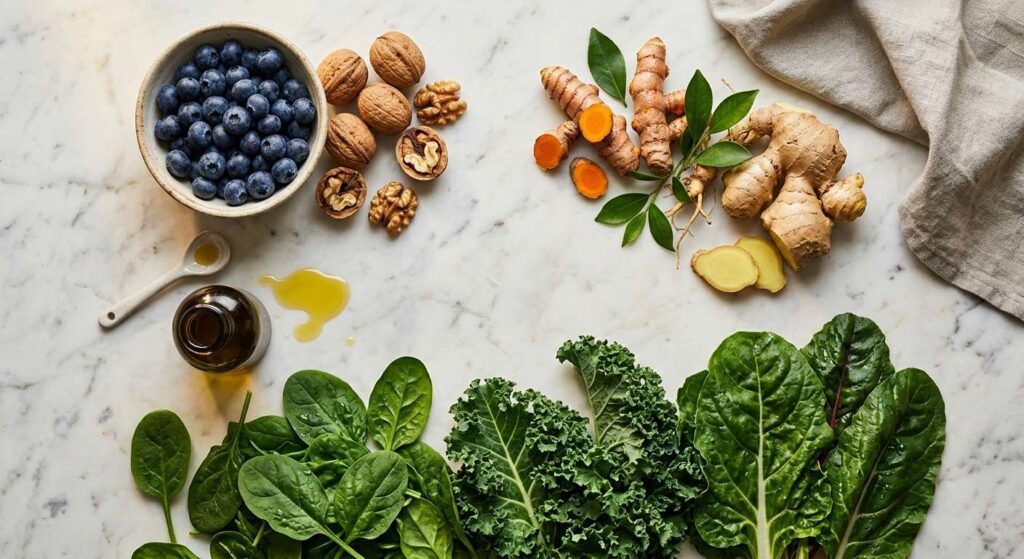
Unlike the acute inflammation that helps your body heal a cut or fight an infection, chronic inflammation simmers quietly in the background for years. Researchers call the age-related version of this process “inflammaging” a portmanteau that captures how aging and inflammation become increasingly intertwined after 55. It has been linked to arthritis, type 2 diabetes, cardiovascular disease, cognitive decline, and several cancers.
What makes this relevant to your kitchen is that food is one of the most direct and well-researched levers for managing inflammatory burden. The American Journal of Clinical Nutrition has published multiple studies confirming that dietary patterns measurably shift inflammatory biomarkers including C-reactive protein (CRP) and interleukin-6 in adults over 55.
The foods with the strongest anti-inflammatory evidence are not exotic or expensive. Fatty fish like salmon, sardines, and mackerel deliver EPA and DHA omega-3 fatty acids that directly suppress inflammatory signaling pathways. Blueberries provide anthocyanins that reduce oxidative stress and accumulate in brain tissue. Extra-virgin olive oil contains oleocanthal, a compound that functions similarly to ibuprofen at the cellular level. Turmeric, paired with black pepper to maximize absorption, inhibits NF-κB the molecule that activates inflammatory genes. Leafy greens, walnuts, ginger, and legumes round out a dietary pattern that consistently outperforms supplements in long-term clinical outcomes.
On the other side of the equation, ultra-processed foods, refined sugars, fried foods, and excess omega-6 fatty acids from seed oils reliably elevate inflammatory markers. The practical shift isn’t about eliminating these foods entirely it’s about changing their frequency from daily to occasional.
A 2023 meta-analysis in Nutrients reviewed 29 randomized controlled trials and found that adherence to a Mediterranean-style anti-inflammatory dietary pattern significantly reduced serum CRP, IL-6, and TNF-α in adults over 50. These aren’t marginal effects. They’re the same markers your doctor tracks at annual checkups and they move meaningfully in response to consistent dietary choices.
One of the most overlooked dimensions of anti-inflammatory nutrition is the omega-6 to omega-3 ratio. Most Americans consume these fats at a ratio of 15:1 or higher. The research suggests a ratio closer to 4:1 is optimal for keeping inflammatory pathways in balance. Replacing seed oils with olive oil, eating fatty fish twice a week, and adding ground flaxseed or walnuts to daily meals closes most of that gap without complex tracking.
Preserving muscle strength through protein
Here is a number that surprises most people when they first hear it: the average American over 55 consumes 30 to 40 percent less protein than their body needs to maintain muscle mass. Not less than an athlete needs. Less than what’s required to simply hold on to the muscle they already have.
The condition this creates sarcopenia, or age-related muscle loss affects roughly one in three Americans over 60. It progresses quietly, without pain or obvious symptoms, until it begins showing up as reduced balance, slower metabolism, greater fatigue, longer recovery from illness, and a gradual loss of physical independence. It is one of the most consequential and least-discussed nutritional problems in older adults.

The biology behind it involves two compounding factors. First, muscle mass naturally declines at a rate of 1 to 2 percent per year starting in your mid-40s, accelerating after 60. Second, your body becomes less efficient at using the protein you consume a phenomenon researchers call anabolic resistance. The muscle-building response to dietary protein blunts with age, which means you need more protein than you did at 35, not less.
The standard recommended dietary allowance of 0.8 grams of protein per kilogram of body weight was set for younger adults and designed only to prevent deficiency. A 2022 review published in the Journal of Cachexia, Sarcopenia and Muscle found that adults over 65 need at least 1.0 to 1.2 grams per kilogram of body weight per day simply to maintain existing muscle and more if the goal is to rebuild what’s already been lost.
For a 160-pound adult, that translates to roughly 73 to 88 grams of protein per day at minimum. Most Americans in this age group are landing closer to 50 to 60 grams.
Closing that gap doesn’t require protein powders or complicated meal planning. It requires deliberate protein distribution across all three meals not just dinner. Research from the University of Texas Medical Branch demonstrated that muscle protein synthesis is maximized when protein is spread evenly throughout the day in portions of 25 to 40 grams per meal. The typical American pattern minimal protein at breakfast, moderate at lunch, heavy at dinner leaves muscles without adequate building material for most of the day.
The most effective whole-food protein sources for adults over 55 combine high bioavailability with additional nutritional value. Eggs provide complete protein alongside choline and leucine the amino acid most directly responsible for triggering muscle synthesis. Greek yogurt delivers 15 to 18 grams per serving alongside probiotics and calcium. Canned salmon and sardines add DHA omega-3s to their substantial protein content. Legumes lentils, chickpeas, black beans contribute 16 to 18 grams per cup along with fiber, magnesium, and anti-inflammatory compounds that support the broader nutritional goals of this age group. Cottage cheese, often underestimated, provides 25 grams per cup in the form of casein a slow-digesting protein that releases amino acids steadily over several hours, making it particularly effective as an evening option.
The other half of the equation is resistance exercise. Protein provides the raw material, but mechanical stress on muscle tissue is the signal that tells your body to use it. Bodyweight exercises, resistance bands, swimming, and even carrying groceries consistently count. The combination of adequate protein and regular resistance activity is what the research consistently identifies as the most effective intervention for slowing and reversing sarcopenia in adults over 55.
Protecting cognitive function through brain-supportive nutrition
A neurologist once told a patient in her early 60s that the most powerful brain supplement she could take was already sitting in the produce aisle. She’d come in worried about forgetfulness names slipping away mid-sentence, a word she knew perfectly well suddenly gone when she reached for it. Her scans were clear. Her diet, however, told a different story.
Cognitive decline is not a guarantee of aging. But it is influenced measurably and directly by what you eat every day. The brain consumes roughly 20 percent of your body’s total energy despite representing only about 2 percent of your body weight. It is the most metabolically demanding organ you have, and it is exquisitely sensitive to the nutritional quality of what you feed it.
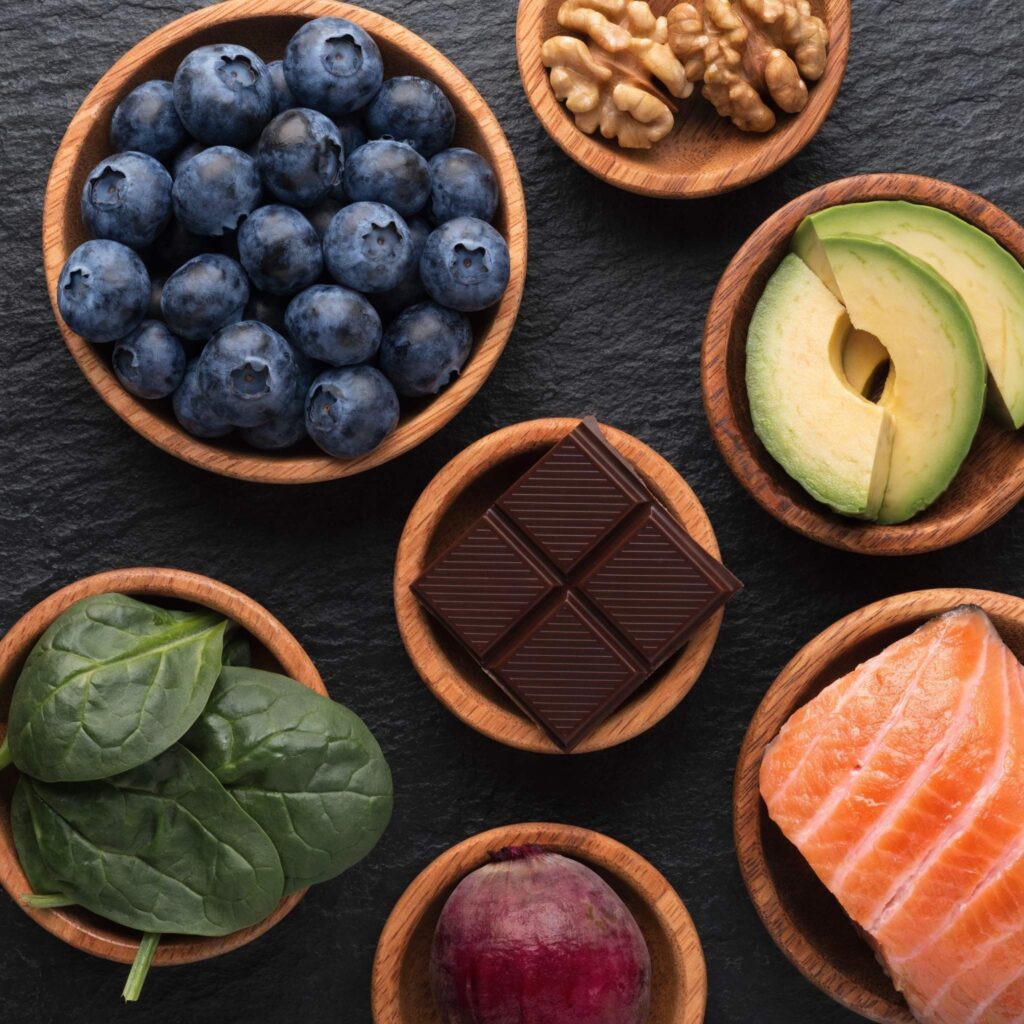
After 55, several processes accelerate simultaneously. Oxidative stress increases as free radical production outpaces your body’s neutralizing capacity. Chronic low-grade inflammation the same inflammaging discussed in the first section of this guide crosses the blood-brain barrier and contributes to neuronal damage over time. Mitochondrial function in brain cells declines. Neurotransmitter production slows. Blood flow to cognitive regions becomes less efficient.
None of this is irreversible. But the dietary choices you make in your 50s and 60s have a documented impact on how your brain functions in your 70s and 80s. A 2020 study published in Neurology followed more than 900 older adults for nearly five years and found that those who most closely followed a brain-supportive dietary pattern showed cognitive abilities equivalent to someone 7.5 years younger than their chronological age. That is not a trivial finding and it came from food, not pharmaceuticals.
The research points consistently to seven food categories with the strongest neuroprotective evidence. Blueberries, rich in anthocyanins that cross the blood-brain barrier and accumulate in the hippocampus, have been shown in Tufts University research to improve memory recall in older adults with early cognitive decline. Fatty fish salmon, sardines, mackerel provide DHA, the structural omega-3 fatty acid that makes up a significant portion of neuronal membrane tissue. Low DHA levels are consistently linked to accelerated cognitive decline and increased Alzheimer’s risk in longitudinal studies. Walnuts supply ALA alongside polyphenols and vitamin E, and UCLA research found that regular walnut consumers scored significantly higher on tests of memory, concentration, and processing speed. Avocados contribute lutein a carotenoid that accumulates in brain tissue and supports neural efficiency. Leafy greens provide vitamin K1, folate, and beta-carotene, and the MIND diet research from Rush University identified this food group as one of the two most critical for reducing the rate of cognitive aging. Dark chocolate at 70 percent cacao or above delivers flavanols that increase cerebral blood flow and support neuroplasticity. Beets supply dietary nitrates that convert to nitric oxide in the body, dilating blood vessels and increasing oxygen delivery to the frontal lobe the region governing decision-making, planning, and working memory.
The MIND diet developed specifically for brain health by nutritional epidemiologist Martha Clare Morris synthesizes this evidence into a practical framework. In Morris’s original study, participants with the highest adherence showed a 53 percent lower rate of Alzheimer’s disease compared to those with the lowest adherence. Even moderate adherence not perfect, just consistent reduced risk by 35 percent. Those numbers hold up across multiple replications and population groups.
One point worth addressing directly: the supplement market aggressively targets adults over 55 on the topic of cognitive health. The evidence for most marketed brain supplements ginkgo biloba, phosphatidylserine, proprietary “brain health” blends is thin at best. The Global Council on Brain Health, convened by AARP, recommends food-first strategies over supplements for the general population. Omega-3 supplementation through fish oil is the one area with more supportive evidence, particularly for those who don’t regularly eat fatty fish but even then, whole food sources consistently outperform isolated supplements in long-term outcomes.
Supporting heart health through targeted nutrition
Cardiovascular disease remains the leading cause of death for Americans over 65. But the conditions that lead to a heart attack or stroke arterial plaque buildup, chronic hypertension, elevated LDL, persistent vascular inflammation don’t appear overnight. They develop quietly over decades, driven in large part by accumulated dietary patterns that most people never connected to their heart until a doctor handed them a concerning lab result.
After 55, the cardiovascular system faces a set of compounding biological changes. Arterial walls stiffen and lose elasticity. LDL particles become smaller and denser, making them more likely to penetrate and damage arterial walls. In women, the decline in estrogen removes a natural cardiovascular protective effect that many didn’t realize they had. Blood pressure tends to rise as vascular resistance increases with age. Taken together, these shifts mean that the dietary choices you make in your late 50s carry more cardiovascular weight than they did at 40.
The encouraging counterpoint is equally clear. The PREDIMED trial one of the largest and most rigorous dietary intervention studies ever conducted, following over 7,400 adults at cardiovascular risk found that those following a Mediterranean-style diet rich in olive oil and nuts had a 30 percent lower risk of major cardiovascular events compared to those on a standard low-fat diet. That is a statin-level effect produced by food choices alone.
Five nutritional principles underpin every effective heart-healthy dietary pattern for adults over 55. The first is reducing LDL cholesterol through soluble fiber and healthy fat substitution. Soluble fiber found in oats, legumes, and certain fruits binds to LDL in the digestive tract and removes it before it enters circulation. Replacing saturated fats with monounsaturated fats from olive oil and avocado lowers LDL without reducing beneficial HDL. The second is managing blood pressure through potassium and magnesium two minerals consistently underconsumed by American adults. Leafy greens, legumes, avocados, and bananas are among the richest sources of both. The third is reducing arterial inflammation through omega-3 fatty acids from fatty fish, which directly suppress the inflammatory processes that damage endothelial tissue. The American Heart Association recommends a minimum of two fatty fish servings per week for cardiovascular protection. The fourth is stabilizing blood sugar to protect vascular integrity chronically elevated glucose damages the endothelium through glycation, and whole grains, legumes, and fiber-rich vegetables slow glucose absorption effectively. The fifth is maintaining a healthy weight to reduce the mechanical workload on the heart itself.
In practical terms, a heart-healthy dietary week for an adult over 55 looks less like a rigid prescription and more like a set of repeatable anchors. Steel-cut oatmeal with ground flaxseed and berries at breakfast covers soluble fiber and ALA omega-3 before 8am. A lunch built around lentils or chickpeas with olive oil and garlic covers plant protein, prebiotic fiber, and anti-inflammatory fats simultaneously. Two dinners per week centered on fatty fish baked salmon, grilled mackerel, sardines over arugula address the omega-3 requirement without complexity. Roasted vegetables built around potassium-rich ingredients like sweet potato, spinach, and asparagus support blood pressure management as a natural side effect of everyday cooking.
What these meals crowd out matters as much as what they include. Excess sodium the primary driver of dietary hypertension hides in canned soups, deli foods, and packaged snacks far more than in home cooking. Refined carbohydrates and added sugars spike triglycerides. The practical goal isn’t perfect avoidance it’s shifting the frequency of heart-straining foods from daily to occasional while making heart-supportive meals the default rather than the exception.
Consistency over time is what moves the numbers. A friend’s cardiologist in Columbus offered him a 60-day dietary challenge before writing a prescription. Eight weeks of deliberate, imperfect but consistent heart-healthy eating dropped his LDL by 27 points. No medication. No dramatic lifestyle overhaul. Just a concrete framework applied with reasonable regularity.
Restoring gut health and microbiome balance after 55
You’ve eaten the same breakfast for fifteen years. It always worked. Then somewhere in your late 50s, it started leaving you bloated, sluggish, and uncomfortable by mid-morning. Nothing on your plate changed. But your gut did and understanding that shift is one of the most underappreciated keys to healthy aging after 55.
Your gut microbiome is an ecosystem of trillions of bacteria, fungi, and microorganisms that governs far more than digestion. It regulates immune response, produces neurotransmitters including roughly 95 percent of your body’s serotonin, manages systemic inflammation, and controls how efficiently you absorb the nutrients from every meal you eat. When it functions well, it quietly supports nearly every system in your body. When it deteriorates, the effects reach well beyond your digestive tract.
After 55, several measurable changes occur simultaneously. Microbial diversity declines and diversity is the microbiome’s primary measure of resilience and function. Populations of beneficial bacteria, particularly Bifidobacterium and Lactobacillus, decrease naturally with age while pro-inflammatory bacterial strains tend to increase, shifting the microbiome toward a state that promotes rather than resolves chronic inflammation. Gut motility slows, increasing transit time and the risk of constipation. Stomach acid production decreases, reducing the breakdown and absorption of key nutrients including vitamin B12, calcium, magnesium, and zinc even when dietary intake appears adequate on paper.
The gut-brain connection adds another dimension that most people don’t anticipate. A 2019 study published in Nature Microbiology found that specific gut bacterial populations were consistently lower in people reporting depression and anxiety, regardless of antidepressant use. Researchers at the University of California, San Diego have linked microbiome disruption in older adults to increased rates of cognitive fog and mood instability. The gut and the brain communicate continuously through the vagus nerve, the enteric nervous system, and the neurotransmitters that gut bacteria produce. When the microbiome is healthy, that communication supports stable mood, clear thinking, and consistent energy. When it’s disrupted, the effects are felt from the stomach to the prefrontal cortex.
The dietary response to these changes works on two levels. Probiotic foods plain Greek yogurt, kefir, kimchi, miso, and tempeh introduce or replenish beneficial bacterial strains directly. A 2021 Stanford University study found that adults who consumed fermented foods daily for ten weeks showed significant increases in microbiome diversity and meaningful reductions in inflammatory markers compared to those on a high-fiber diet alone. Kefir, with its broad profile of 12 or more distinct bacterial strains, offers the widest single-source microbial diversity of any common food. Kimchi adds potent anti-inflammatory compounds alongside its probiotic content.
Prebiotic foods feed and sustain the bacteria already present in your gut. Garlic and onions deliver inulin and fructooligosaccharides that selectively stimulate Bifidobacterium growth. Steel-cut oats provide beta-glucan a soluble fiber that simultaneously feeds beneficial bacteria and reduces LDL cholesterol, making it one of the most multifunctional ingredients in a senior’s kitchen. Slightly underripe bananas retain resistant starch that ferments slowly in the colon and produces butyrate the primary fuel source for the cells lining your colon and a key regulator of intestinal inflammation. Asparagus, ground flaxseed, and leeks complete a prebiotic foundation that is accessible, affordable, and easy to build into everyday meals.
The single most impactful gut health intervention available without a prescription is closing the fiber gap. Most Americans over 55 consume fewer than 15 grams of dietary fiber per day. Current evidence recommends 25 to 35 grams. That gap closed gradually over several weeks to allow the microbiome to adjust without discomfort accounts for more of the measurable difference in gut health outcomes than any individual food or supplement.
The critical word is gradually. Introducing fermented foods, dramatically increasing fiber, and adding multiple new ingredients simultaneously is the most common mistake people make when addressing gut health. The microbiome adapts, but it adapts in steps. Moving too fast produces bloating and discomfort that can feel like failure when it’s actually just adjustment. A week-by-week layering approach one new probiotic food in week one, one prebiotic addition in week two, a second fermented food in week three produces sustainable results without the discouraging setbacks.
The return on this investment compounds over time. A diverse, well-fed microbiome lowers your systemic inflammatory baseline, strengthens immune regulation, improves nutrient absorption from every meal you eat, stabilizes mood and energy, and supports the cognitive and cardiovascular health addressed in every other section of this guide. These are not separate systems with separate dietary solutions. They are interconnected and the gut is where much of the integration happens.
Healthy eating after 55 is not about starting over. It’s about recalibrating understanding that your body’s needs have genuinely shifted and responding with food choices that match where you are now, not where you were at 35.
The five areas covered in this guide are not isolated concerns. They form an interconnected system. The chronic inflammation you reduce through anti-inflammatory foods directly lowers the burden on your heart and brain. The protein you eat to preserve muscle also stabilizes blood sugar and supports metabolic function. The fiber you add for gut health feeds the bacterial populations that regulate your immune system and produce the neurotransmitters that influence your mood. The omega-3 fatty acids you consume for cardiovascular protection also support neuronal membrane integrity and cognitive function. Every deliberate food choice you make touches more than one system simultaneously.
That’s what makes nutrition such a powerful lever at this stage of life. You’re not managing five separate problems. You’re building one coherent foundation and each section of this guide is a different entry point into the same underlying architecture.
A few principles hold across all five areas. Whole foods consistently outperform supplements in long-term outcomes. Consistency over weeks and months matters far more than perfection on any single day. Gradual, sustainable changes produce better results than dramatic overhauls that collapse under the pressure of real life. And the specificity of your choices matters not just “eat vegetables,” but which vegetables, how often, and in what combinations.
The research behind all of this is solid and growing. The PREDIMED trial, the MIND diet studies from Rush University, the sarcopenia research from the University of Texas Medical Branch, the microbiome work from Stanford and UC San Diego these are not fringe findings. They are replicated, peer-reviewed, and increasingly consistent in their direction. Food shapes biology at every age, but the evidence for targeted nutrition in adults over 55 is particularly compelling because the stakes are higher and the mechanisms are better understood.
You don’t need to implement everything at once. The most effective approach is sequential. Pick one area where you feel the most immediate need whether that’s joint pain, low energy, digestive discomfort, or concern about your last cholesterol reading and start there. Build one new habit into your week. Once it feels automatic, add another. Over three to six months, the cumulative effect of those layered changes is what the research documents: lower inflammatory markers, better muscle maintenance, improved cognitive scores, healthier cardiovascular readings, and a gut microbiome that actually supports rather than undermines everything else you’re trying to do.
Healthy aging is not passive. It is built, meal by meal, in ordinary kitchens by people who understand that what they eat today is either investing in or drawing down on their future health. The good news is that the foods that do this most effectively olive oil, fatty fish, leafy greens, legumes, berries, walnuts, fermented dairy, whole grains are not exotic, expensive, or difficult to prepare. They are already available at every American grocery store. What changes with this knowledge is not your budget. It’s your intentionality.
If you’re ready to translate this overview into a concrete first action, the most immediate and practical starting point is building a weekly eating framework your heart and every other system covered in this guide will benefit from directly. The 7-day heart-healthy meal plan built specifically for seniors over 55 gives you a complete, ready-to-use weekly structure with real meals, preparation times, and a nutrient reference table that brings everything in this guide to the table.
Hi, this is a comment.
To get started with moderating, editing, and deleting comments, please visit the Comments screen in the dashboard.
Commenter avatars come from Gravatar.